Character, Kapers, and Coming Home to Camp
What a SUMMER camp reunion taught me about the character we're all trying to build
Right is right, even if no one else does it.
~Juliette Gordon Low
Last week, I went back to camp.
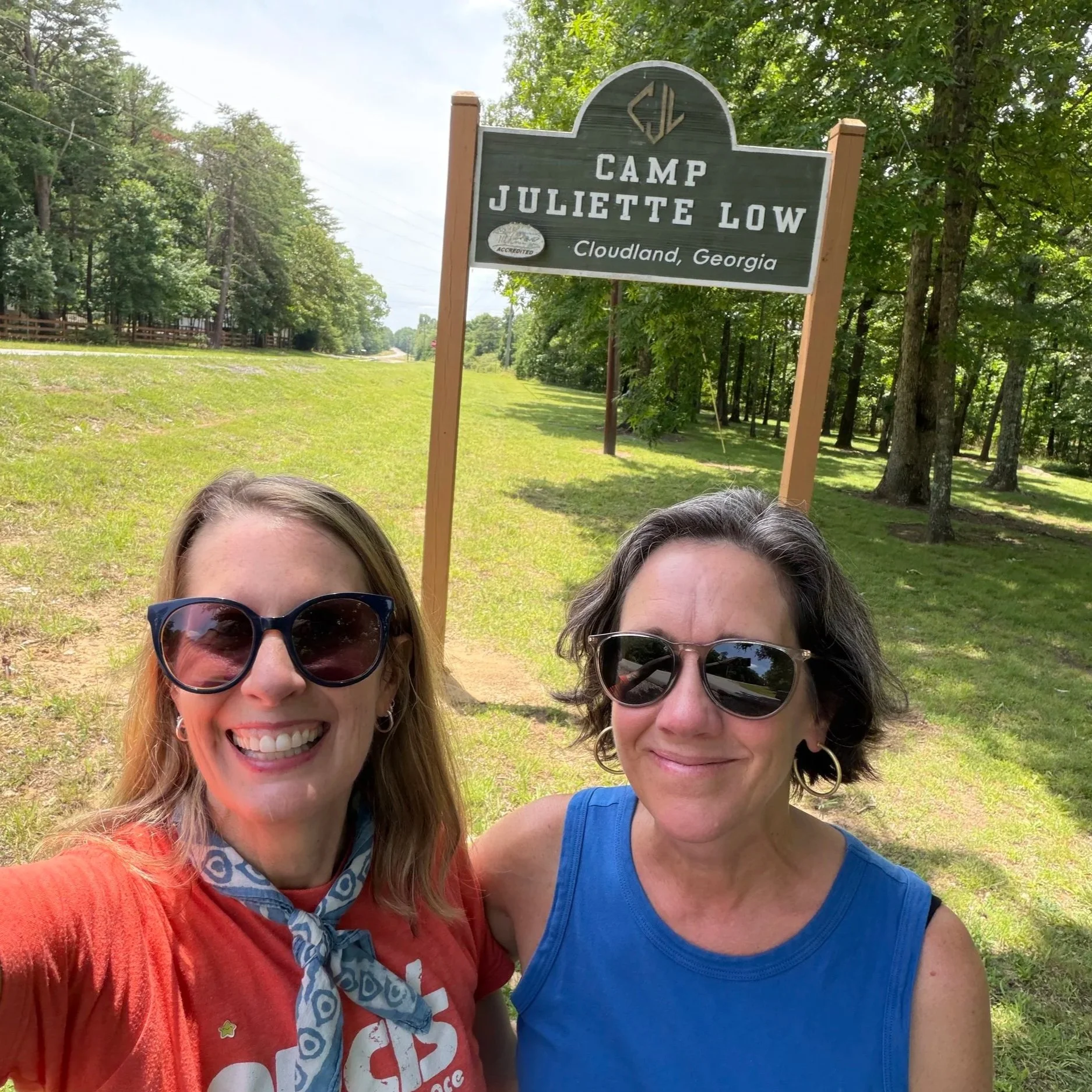
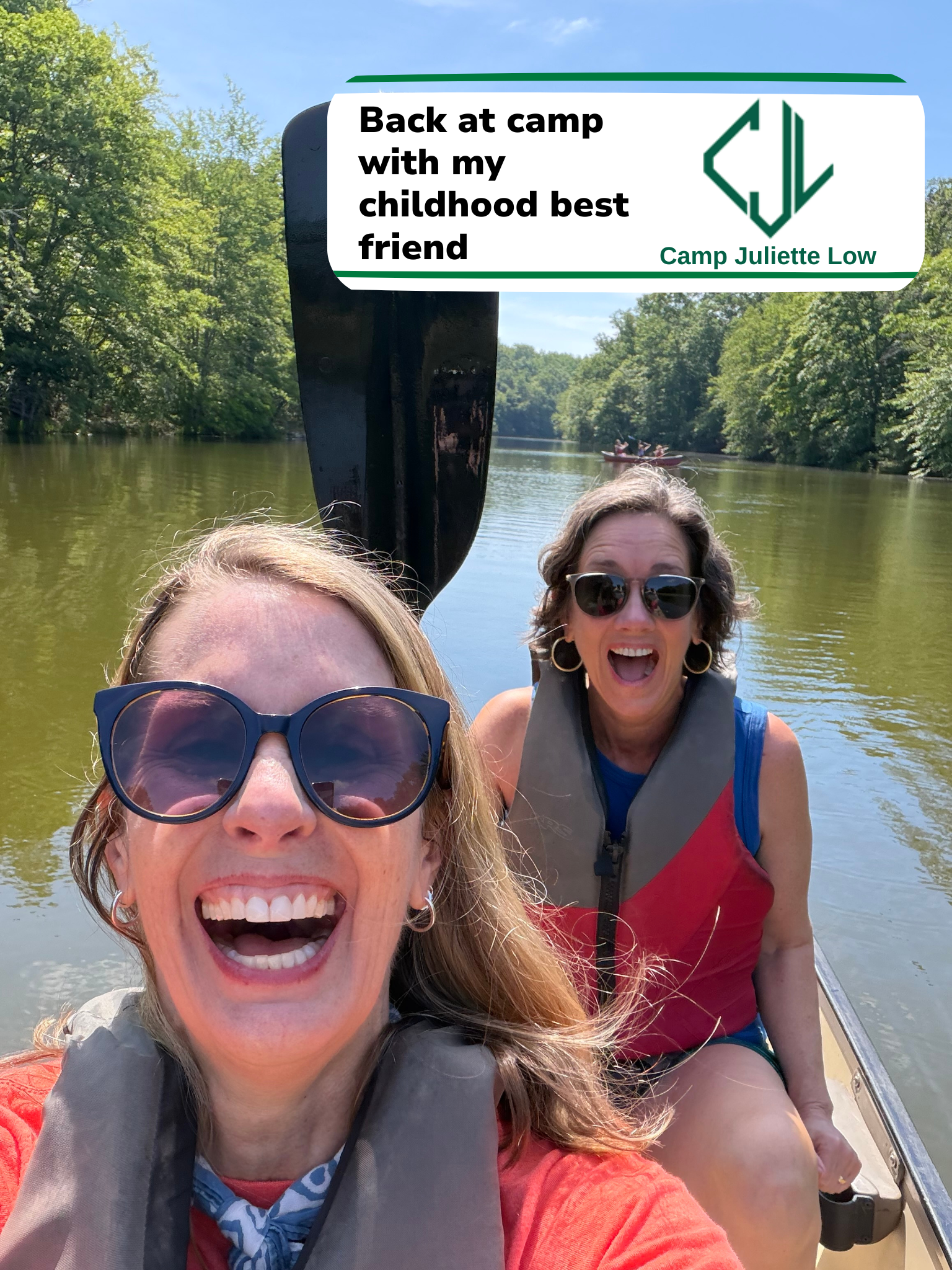
Not camp in the abstract. Not camp as a memory. Literally. I drove to Cloudland, Georgia, stood beneath the Camp Juliette Low (CJL) sign with my childhood best friend Robin, and spent the day walking through a place that helped shape who I became.
The Little River still rushes over the same rocks. The dining hall still hums with conversation and controlled chaos. Girls still spend their days learning archery, canoeing, outdoor skills, songs, and traditions that have been passed from one generation to the next.
I spent twelve summers at Camp Juliette Low as a camper, CIT, and counselor. This time I returned as an alumna, a member of the strategic planning committee, and an evaluation consultant helping think about the future of the organization.
About one hundred alumnae gathered for the reunion. Some had attended camp only a few years ago. Others had stories that stretched back decades. Sitting among them, I found myself asking the same question I ask in nearly every youth development project:
What is actually doing the work here?
As researchers and practitioners, we spend a great deal of time talking about outcomes. We build logic models. We identify indicators. We define leadership, belonging, resilience, agency, and character. We work to understand which experiences help young people grow into capable, caring adults.
At Camp Juliette Low, I kept coming back to kapers.
The character in kapers
For those unfamiliar with the term, "kapers" are camp chores. Every meal comes with responsibilities. Someone scrapes dishes. Someone washes. Someone rinses. Someone stacks. Someone sweeps. A counselor checks the work before anyone leaves.
Everyone participates.
At my table, one alumna had been connected to the camp for longer than I have been alive. Camper. Counselor. Nurse. Volunteer. She scraped her plate just like everyone else.
No one was above the system.
What struck me wasn't the chore itself. It was the message embedded within it: This community works because everyone contributes.
Responsibility is shared. Work is shared. Accountability is shared.
Young people are not listening to a lecture about citizenship. They are practicing it.
That is one of the lessons I carry into my work with youth-serving organizations. Character development is often discussed as though it lives inside a curriculum. And, sure, sometimes it does. More often, it lives inside expectations, routines, relationships, traditions, and opportunities to contribute.
Character develops when young people experience what it feels like to be responsible for something larger than themselves.
The founder of Camp Juliette Low understood this.
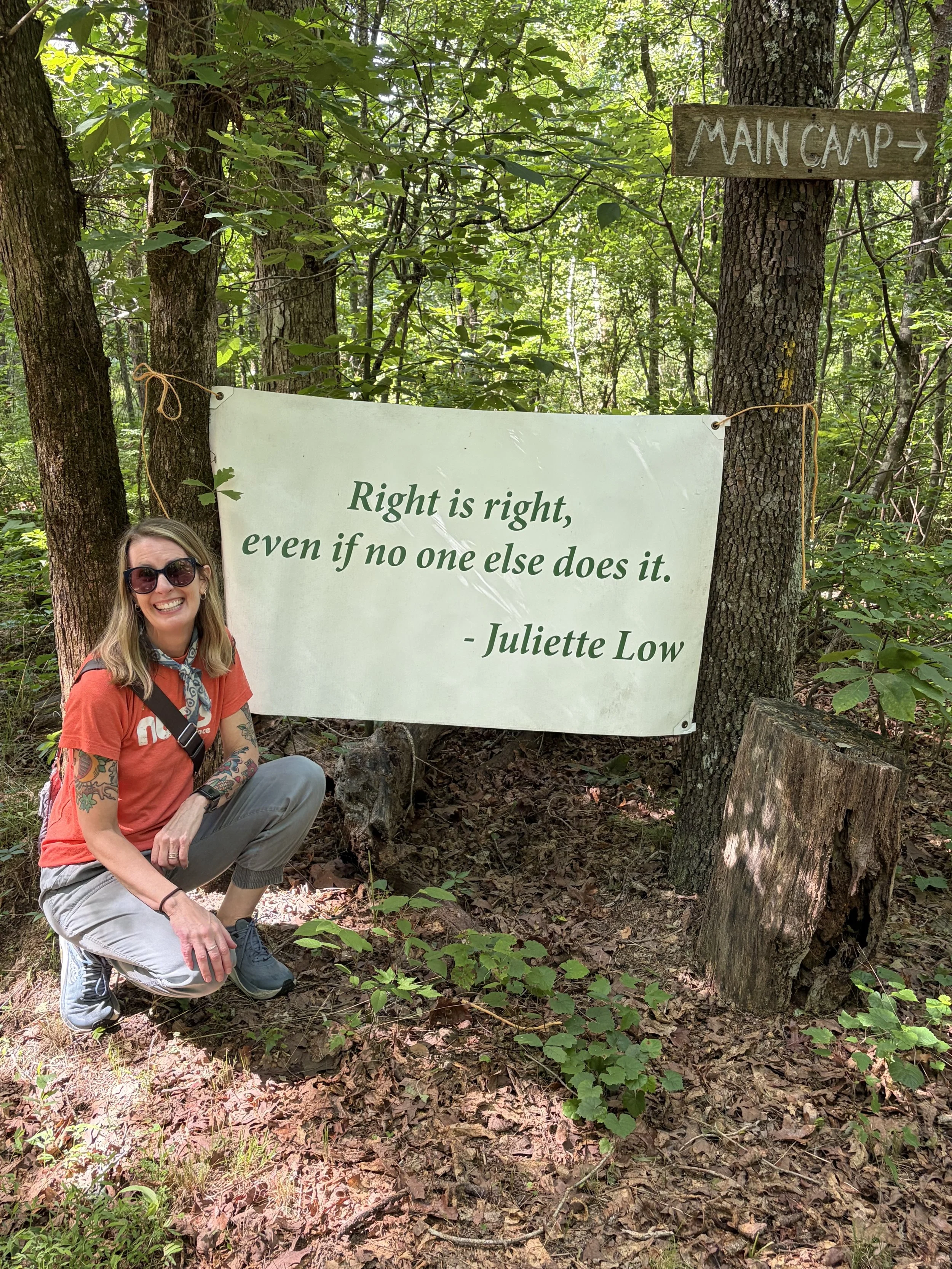
There's a banner in the woods.
Along one of the wooded trails is a sign bearing a quote from Juliette Gordon Low:
"Right is right, even if no one else does it."
I heard those words countless times as a camper. This visit, they landed differently.
The youth-serving field is navigating important questions right now. What values are we helping young people develop? How do we create environments that support belonging and responsibility? What experiences prepare young people to make thoughtful decisions when the answers are not easy?
Those questions matter because character is not built through slogans. It develops through repeated opportunities to make choices, contribute to community, and practice responsibility.
* The archery range matters.
* The canoe trips matter.
* The songs matter.
* The kapers matter.
Each one creates opportunities for young people to develop habits, relationships, and ways of being that stay with them long after camp ends.
What I took home.
As an evaluator, I believe deeply in questioning assumptions. I believe in data, evidence, and continuous improvement. I also believe there is value in paying attention to practices that have quietly shaped generations of young people.
The goal is never to preserve tradition simply because it is old.
The goal is to understand why something works.
Last week reminded me that some of the outcomes we spend so much time measuring are already visible in places like Camp Juliette Low. They show up in the way people share responsibility, care for one another, and contribute to community.
The language we use may change. The frameworks may evolve. The research will continue to grow.
The work itself remains remarkably familiar.
A table full of people doing their part.
A community that expects contribution.
A young person learning, day after day, what it means to do the right thing.
Even when no one is watching.
Dr. Cristin Rollins is President & CEO of Statement House and Founding Director of the Character Impact Lab.
Camp Juliette Low
is a private camp for girls located on Lookout Mountain in Cloudland, Georgia. Founded by the OG Girl Scout, Juliette Gordon Low, CJL has built generations of leaders since 1922. Find out more at https://cjl.org